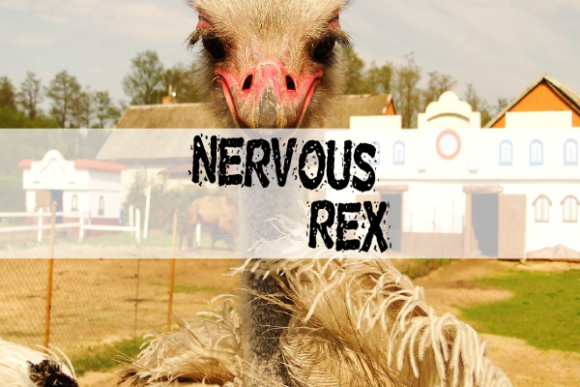
Nervous Rex: The Shredded Display Font with Serious Personality
There are typefaces that whisper, and there are typefaces that shout. Nervous Rex does something more interesting—it crackles with a raw, energetic tension that makes you look twice. Created by designer Vic Fieger, this premium font isn't just another playful display option; it's a visual statement piece that can transform ordinary projects into memorable ones. If you've been searching for a creative font that brings genuine character to your work without sacrificing usability, this might be the design asset you didn't know you needed.
What Makes This Typeface Stand Out in a Crowded Market
Let's be honest: the font marketplace is overwhelming. Thousands of options promise to "elevate your designs" or "take your brand to the next level." Most of them blur together after a while. Nervous Rex sidesteps that problem entirely through its distinctive shredded aesthetic. The letterforms have a distressed, textured quality that feels organic rather than over-processed. Each character carries visible energy—like it was drawn quickly by someone with incredible control and a restless creative impulse.
Unlike many display fonts that rely on gimmicks, this typeface maintains strong readability despite its unconventional style. The letters are bold enough to command attention at larger sizes, and the overall design holds together cohesively across full words and phrases. That balance between personality and function is surprisingly rare, and it's exactly what makes Nervous Rex valuable for real-world projects rather than just design experiments.
Where This Font Actually Works Best
Understanding where a font like this shines—and where it doesn't—is the difference between a smart design choice and a frustrating one. Nervous Rex is fundamentally a display typeface, which means it's built for headlines, logos, and short bursts of text that need maximum visual impact. It's not your body copy font. Think of it as the exclamation point in your typography system rather than the sentence that follows.
Here's where designers and business owners are finding genuine success with it:
- Brand identity projects where the goal is to stand apart from competitors using safe, predictable typography
- Packaging design for products targeting younger demographics or audiences who respond to bold, irreverent aesthetics
- Social media graphics where you have roughly two seconds to stop someone from scrolling past your content
- Event posters and flyers for music events, art shows, streetwear launches, or anything with an underground creative vibe
- Merchandise like t-shirts, stickers, and tote bags where the text itself becomes a design element
- Website headers and hero sections that need to establish mood immediately
- Blog graphics and thumbnails that compete in visually saturated feeds
- Invitations for parties, launches, or casual events where formality would feel out of place
- Digital products like ebook covers, course graphics, or downloadable templates aimed at creative audiences
The common thread? These are all situations where personality matters more than tradition, and where standing out is more valuable than blending in.
Pairing Nervous Rex with Other Fonts
No typeface works in isolation, and this is especially true with a strong display font. The key to using Nervous Rex effectively is building thoughtful font pairings around it. Because it carries so much visual weight and texture, you'll want to balance it with something cleaner and more restrained for supporting text.
A solid sans serif font works beautifully alongside it for subheadings and body copy. Think of typefaces with geometric or humanist qualities—something that provides breathing room without competing for attention. If your project calls for more warmth, a simple handwritten font or a clean script font could complement the shredded aesthetic without creating visual chaos.
Avoid pairing it with other distressed or heavily stylized fonts. Two strong personalities in the same composition usually end up fighting each other rather than working together. The goal is contrast, not competition. Let Nervous Rex own the spotlight while supporting fonts handle the quieter, essential work of conveying detailed information clearly.
Test your pairings at actual sizes before committing. What looks balanced in a mockup at 72pt might feel completely different at the size it will actually appear on a product label or social media post. Print a test if you're working on physical materials. View it on different screens if it's destined for digital use.
Readability Considerations for Real Projects
Every designer wrestles with the tension between style and legibility, and it's worth addressing directly. Nervous Rex reads well at display sizes—headlines, logos, banner text. Where you'll run into trouble is if you try to use it for paragraphs, fine print, or any context where readers need to process information quickly at smaller scales.
This isn't a flaw; it's simply how display fonts work. The shredded details that make the typeface visually exciting become noise when the letters are too small. Respect that boundary, and you'll get consistently strong results.
Color contrast matters too. Because the textured letterforms have inherent visual complexity, they benefit from clean, high-contrast backgrounds. Placing Nervous Rex text over busy photographs or heavily patterned surfaces can muddy its impact. Solid colors, simple gradients, or clean image areas with plenty of negative space will let the font's character come through clearly.
Licensing and Commercial Use
If you're planning to use this font for client work, products for sale, or any commercial application, take a moment to review the licensing terms. Most premium fonts come with specific licenses that outline how they can be used—whether that's for a single project, multiple projects, or across an entire organization. Some licenses cover desktop use but require additional permissions for embedding in apps or digital products.
This isn't the exciting part of choosing a typeface, but it protects both you and the designer who created the work. A quick review of the license before you start a project prevents headaches later, especially if the finished work will be distributed widely or reproduced at scale.
Making the Most of Your Investment
A quality display font is a design asset that pays for itself across multiple projects. Once you've added Nervous Rex to your toolkit, look for ways to use it consistently as part of your broader visual language. A brand that uses the same distinctive typeface across packaging, social media, website headers, and print materials builds recognition faster than one that jumps between different fonts with every new project.
That said, consistency doesn't mean using it everywhere. Smart typography is about knowing when a font serves the project and when something else would communicate more effectively. For a brand with both playful and professional dimensions, Nervous Rex might handle campaign-specific graphics and product launches while a more neutral serif font or modern sans serif handles day-to-day business communications.
The best typography decisions come from understanding your audience, your message, and your goals—and then finding the typeface that brings all three together visually. If your work needs that raw, energetic edge that makes people pay attention, Nervous Rex delivers it with a confidence that feels earned rather than forced.