Inkodle: Capturing the Authentic Spirit of Handmade Design
Sometimes, the most powerful designs aren't the ones with perfect geometry and razor-sharp edges. Often, they are the ones that feel like they were drawn by a human hand on a scrap of paper. There is a distinct warmth in imperfection—a nostalgia for sketchbook margins and coffee shop napkins—that polished digital vectors simply cannot replicate. If you are working on a project that demands authenticity, playfulness, and a break from corporate rigidity, you need a typeface that embraces the messy beauty of creativity. That is exactly where this unique handwritten font comes into play, offering a bridge between digital precision and analog charm.
The Visual Language of Spontaneity
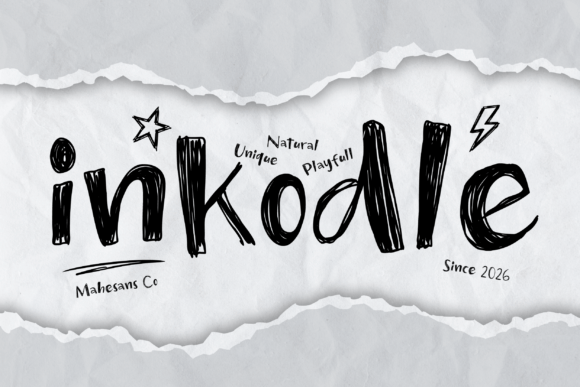
Inkodle is not just a collection of letters; it is a visual representation of a mood. Designed to mimic the look of spontaneous marker strokes and hurried pencil notes, it captures the energy of an idea as it first hits the page. Unlike many script fonts that feel overly swashed or calligraphic, Inkodle leans into the "rough draft" aesthetic. The letterforms feature uneven textures and organic flow, meaning they don't look like they were generated by a computer algorithm. Instead, they look like they were crafted with intention, yet with a relaxed hand.
This visual style is incredibly effective because it signals approachability. In the world of modern typography, we are seeing a significant shift away from rigid sans-serifs toward typefaces that have distinct personalities. Inkodle fits perfectly into the category of premium fonts that prioritize character over clinical perfection. The slightly irregular baselines and varied stroke weights give the text a kinetic energy. It feels alive, which makes it an excellent tool for designers who want to inject personality into their work without sacrificing legibility.
Practical Applications for Creative Projects
When you are selecting a display font, you need to think about where it will live. Inkodle is versatile enough to handle a variety of contexts, particularly those that require a friendly, human touch. Because it is a creative font, it shines brightest in headlines, logos, and short bursts of text where its unique details can be appreciated.
Consider the following real-world scenarios where Inkodle can transform a standard layout into something memorable:
- Brand Identity and Logo Design: For startups, cafes, independent artists, or children’s clothing lines, a logo sets the tone. Inkodle provides a logo design solution that feels bespoke and hand-crafted. It tells customers that the brand is creative, accessible, and perhaps a little bit quirky.
- Packaging Design: On a shelf crowded with sterile, minimalist packaging, a product using handwritten typography stands out. Inkodle is perfect for artisanal goods, snack foods, or craft supplies. It adds a tactile quality to the visual presentation, making the box or wrapper feel like part of the product itself.
- Social Media Graphics: Algorithms often favor content that stops the scroll. Using Inkodle for quotes, announcements, or Instagram stories adds a layer of authenticity that standard system fonts lack. It helps create a consistent aesthetic for your feed that feels personal and curated.
- Merchandise and Apparel: Tote bags, t-shirts, and mugs often rely on short, impactful phrases. Inkodle’s energetic vibe makes it ideal for casual merchandise. The text looks like it was sketched onto the fabric, giving the item a cool, DIY vibe.
Bridging the Gap Between Professional and Personal
One of the biggest challenges in design is balancing professionalism with personality. You want your business to be taken seriously, but you also don't want to look like a faceless corporation. This is where the choice of typeface becomes a strategic decision.
Inkodle allows you to maintain a professional presentation while softening the edges of your communication. For example, a law firm might stick to a classic serif font, but a freelance consultant or a life coach might use Inkodle to appear more relatable. It works exceptionally well for blog headers, "About Me" pages, and email opt-ins where you are speaking directly to the reader. It breaks down the barrier between the brand and the audience, fostering a sense of connection that drives audience engagement.
Furthermore, for digital products like e-books, workbooks, or planners, Inkodle adds a high-value feel. It suggests that the content was curated and designed with care, rather than just typed out in a word processor. This perceived value can justify a higher price point and increase customer satisfaction.
Mastering Font Pairings and Readability
While Inkodle is a powerful standalone tool, it truly excels when paired correctly. A common mistake with display fonts is using them for body text. Because Inkodle has a lot of texture and personality, long paragraphs can become tiring to read. To maintain readability, pair Inkodle with a clean, neutral sans-serif font or a simple serif font for your body copy.
For instance, if you are designing a poster, use Inkodle for the main headline to grab attention. Then, use a font like Open Sans, Lato, or Roboto for the details (time, location, price). This contrast creates a visual hierarchy that guides the viewer's eye naturally. The headline provides the energy, and the body copy provides the information.
Here are a few tips for testing your font pairings:
- Check the X-Height: Ensure the lowercase letters of your body font aren't drastically different in size compared to Inkodle, or the layout will look disjointed.
- Contrast Styles: Don't pair Inkodle with another loose, organic script. Instead, pair it with something structured and geometric to create balance.
- Test in Context: Don't just look at the fonts side-by-side in a design tool. Mock them up on your actual medium—whether that is a website header, a business card, or a coffee cup.
Licensing and Commercial Usage
If you are planning to use Inkodle for client work or your own business, it is vital to understand the licensing. As a commercial font, Inkodle typically comes with a license that dictates how it can be used. Most premium fonts allow for usage in digital assets (websites, social media) and physical products (merchandise, print), but the specifics can vary.
Before finalizing your project, review the license to ensure it covers your specific needs, especially if you are creating marketing assets for a large corporation or distributing the font within a digital template that you sell to others. Respecting the typographer's work ensures that the ecosystem of high-quality design assets continues to thrive.
Ultimately, choosing a font like Inkodle is about more than just aesthetics; it is about choosing a voice for your visual communication. It is about saying, "We are human, we are creative, and we don't take ourselves too seriously." By integrating this playful, sketch-inspired typeface into your toolkit, you gain the ability to make any project feel more personal and inviting. Whether you are designing a wedding invitation or a startup pitch deck, the right touch of handwritten authenticity can make all the difference.