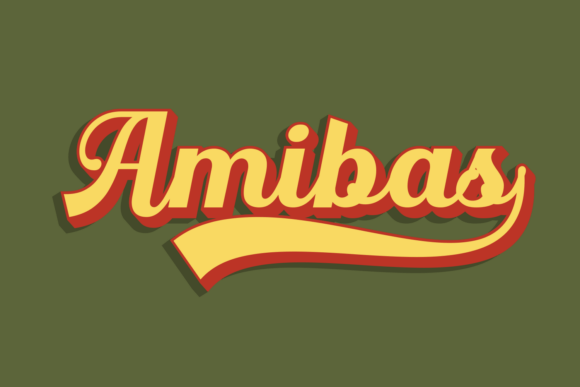
Amibas: A Retro Font That Brings Bold Energy to Modern Projects
There’s something magnetic about vintage sports branding and 70s-era logos—the thick curves, the confident shadows, the sense of motion frozen in time. If you’ve ever wanted to capture that energy in your own designs without settling for a generic retro font, Amibas delivers exactly that kind of punch. This isn’t just another script typeface with a few swashes thrown in. It’s a carefully crafted display font that channels the golden era of athletic branding, retro signage, and bold headline typography, giving you a design tool that feels both nostalgic and refreshingly versatile.
What Makes Amibas Stand Out in a Crowded Font Market
Let’s be honest—there are thousands of script fonts and retro typefaces available today. So what makes this one worth your attention? The answer lies in its personality. Amibas features thick, confident letterforms with a distinctive drop shadow effect built right into the design. That shadow alone saves you time in post-production, because the depth and dimension are already baked into the characters. The dynamic swashes and that classic baseball-style tail on the lowercase letters give it movement, like the text is about to leap off the page.
This font doesn’t whisper. It announces. And that’s precisely why it works so well for projects that need to make an immediate visual impact—think apparel branding, event posters, menu headers, or social media announcements that need to stop a scrolling thumb in its tracks.
Where Amibas Really Shines: Practical Applications
Understanding a font’s personality is one thing. Knowing exactly where to use it is where the real value lives. Here’s where this retro-inspired script typeface tends to perform best:
- Logo design and brand identity – If you’re building a brand with a sporty, vintage, or Americana aesthetic, Amibas gives your logo instant character. It works particularly well for breweries, barbershops, fitness brands, food trucks, and boutique apparel lines that want to evoke a sense of heritage and authenticity.
- Packaging design – Shelf appeal matters. A bold display font like this one grabs attention on product labels, box designs, and hang tags. It pairs beautifully with simpler sans serif fonts for product descriptions, letting the main brand name do the heavy lifting visually.
- Posters and signage – Whether you’re designing for a local event, a sports league, or a storefront, the thick letterforms and shadow effect ensure readability from a distance. This is a font that was practically designed for large-format applications.
- Social media graphics – Instagram stories, YouTube thumbnails, Facebook event covers—these platforms reward bold, eye-catching visuals. Amibas brings that scroll-stopping quality without requiring extensive design work on your part.
- Merchandise and apparel – T-shirts, hats, tote bags, and hoodies all benefit from typefaces that look great at various scales. The retro athletic vibe of Amibas translates naturally to wearable designs.
- Invitations and event materials – Think beyond the obvious. A vintage-themed wedding, a milestone birthday party, or a corporate retreat with a throwback theme could all use this font to set the tone on invitations, programs, and signage.
Pairing Amibas with Other Fonts for a Balanced Design
One of the most common mistakes designers make with bold display fonts is using them for everything. Amibas is a headline font—a premium font built for impact, not for body text. The thick strokes and decorative swashes would overwhelm a paragraph. Instead, pair it with a clean sans serif font like Montserrat, Open Sans, or even a simple serif font for longer copy. This contrast creates visual hierarchy: the retro script draws the eye to your headline or brand name, while the supporting typeface handles the details without competing for attention.
When testing font pairings, try setting your headline in Amibas and your subheadline or body text in something neutral. Step back and squint at the layout. If the headline still reads clearly and the overall composition feels balanced, you’ve found a winning combination. If the design feels cluttered, simplify the supporting font or increase the spacing around your headline text.
Readability Considerations That Matter
Every creative font comes with trade-offs, and being honest about them helps you make better design decisions. Amibas is highly legible at medium to large sizes, which is exactly where you’ll use it—logos, headers, posters, banners. At very small sizes, the shadow effect and swash details can start to muddy, so avoid using it for fine print, legal text, or anywhere below roughly 18 points.
Color contrast also plays a role. The built-in drop shadow looks best when there’s enough contrast between the text and background. Dark text on a light background is the safest bet, but you can experiment with reversed-out white text on darker backgrounds as long as the shadow detail remains visible. Testing on both screen and print before finalizing is always a smart move, especially if you’re producing physical materials like packaging or signage.
Licensing and Font Files: What to Know Before You Commit
Before downloading any commercial font, including Amibas, take a moment to review the licensing terms. Most premium fonts come with specific permissions and restrictions around commercial use, embedding in digital products, and redistribution. If you’re a small business owner creating your own branding, a standard commercial license typically covers you. If you’re a designer creating assets for clients, make sure the license allows for that kind of use, or purchase the appropriate license on behalf of your client.
Also check what file formats are included. A well-distributed font package usually includes OTF or TTF files for desktop use and sometimes a web font format like WOFF or WOFF2 for websites. Having access to multiple formats gives you flexibility across print and digital projects.
Building a Consistent Visual Identity with the Right Typeface
Choosing a font isn’t just an aesthetic decision—it’s a strategic one. The typefaces you use across your branding become part of how people recognize and remember you. When Amibas shows up consistently on your social media graphics, your packaging, your website headers, and your merchandise, it builds a visual thread that ties everything together. That consistency is what separates amateur-looking brands from ones that feel intentional and professional.
Think about brands you admire. Chances are, their typography is consistent and deliberate. The font choice reinforces their personality—whether that’s playful, authoritative, luxurious, or in this case, bold and retro. If your brand identity leans into nostalgia, athleticism, or vintage Americana, a typeface like this one becomes more than decoration. It becomes a core part of your brand voice.
The best design decisions happen when you match the tool to the goal. If your project needs energy, confidence, and a touch of vintage charm, Amibas is a typeface that delivers on all three without feeling like a gimmick. Use it where it belongs—in the spotlight—and let it do what it does best: make your designs impossible to ignore.