Diary Love: The Handwritten Font for Warm, Friendly Designs
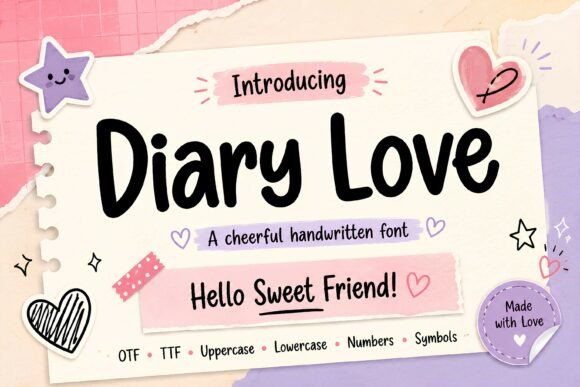
There's a particular feeling you get when you open a well-loved notebook—the kind with soft edges and pages filled with doodles, notes, and half-finished lists. It feels personal, inviting, and unmistakably human. That's the exact sensation Diary Love brings to a design. This cheerful handwritten font doesn't just sit on the page; it greets you with a friendly, casual energy that feels like a conversation between close friends. Its soft, natural letterforms strike a beautiful balance, offering the charm of a genuine hand-drawn style while maintaining the clarity needed for practical use.
More Than Just a Cute Typeface
At first glance, you might categorize Diary Love purely as a "cute" font. And it absolutely excels in that realm. But to limit it there would be to overlook its versatility. The font's personality is built on a foundation of warmth and approachability, making it a powerful tool for connecting with an audience on an emotional level. The slightly rounded edges and organic flow of each letter avoid the rigid, mechanical feel of many digital typefaces. This quality makes it particularly effective for projects where you want to convey authenticity, care, and a handmade touch.
Think about the last time a brand's packaging or social media post made you smile. Chances are, the typography played a key role. Diary Love has that innate ability to inject positivity and friendliness into a visual identity. It’s not trying to be overly formal or avant-garde; it’s simply, genuinely pleasant. This makes it an excellent choice for anyone looking to build a brand voice that feels approachable and trustworthy, rather than distant and corporate.
Where This Handwritten Font Truly Shines
The practical applications for a font like Diary Love are surprisingly broad, spanning both digital and physical spaces. Its legibility at various sizes, thanks to its clean and consistent baseline, allows it to move fluidly across different media.
For Branding and Identity: Small businesses, especially those in the lifestyle, wellness, children's products, or artisanal food spaces, can use Diary Love to craft a logo and supporting materials that feel personal and caring. Imagine a bakery's logo, a boutique's shopping bags, or a skincare line's labels—all radiating a warm, handmade vibe that tells customers, "We put love into what we do."
For Digital Presence: On social media, attention spans are short. A friendly, readable script font like Diary Love can make quotes, announcements, and call-to-action text stand out in a crowded feed. It’s perfect for Instagram stories, Pinterest graphics, and Facebook posts where a personal connection is key. For blogs and websites, it can be used sparingly for headings, pull quotes, or author names to add a layer of personality without sacrificing the readability of body text (which is best handled by a clean sans serif font).
For Print and Packaging: This is where the font's character truly comes to life. On greeting cards, wedding invitations, and event posters, Diary Love sets a joyful and intimate tone. For product packaging, especially for handmade goods, craft supplies, or children's items, it communicates the care and individuality behind the product. It’s equally at home on planner stickers, scrapbook elements, and classroom materials, adding a touch of cheerfulness to organizational tools.
Making It Work: Practical Tips for Using Diary Love
Choosing a font is just the first step. Using it effectively is what elevates a design from good to great. Here’s how to integrate Diary Love into your projects successfully.
Font Pairing is Everything: A handwritten display font like Diary Love rarely works well for long paragraphs of text. Its strength is in headlines, logos, and short bursts of impactful copy. Pair it with a highly legible, neutral font for body text. A simple sans serif like Lato, Open Sans, or Montserrat creates a clean, modern contrast that lets Diary Love's personality pop without causing visual clutter. For a more classic feel, a light serif font like Lora or Playfair Display can also work beautifully.
Test for Readability in Context: Always test your font choices at the actual size they'll be viewed. A word that looks lovely on your 27-inch monitor might become an unreadable squiggle on a mobile phone screen or a small product label. Check the kerning (space between letters) and ensure critical information, like a business name or key message, remains crystal clear.
Leverage the Full Style Family: A quality premium font like Diary Love often comes with more than just the basic alphabet. Look for included styles like bold or light weights, which can create hierarchy within your design. Many handwritten fonts also include a set of alternate characters or ligatures—special letter combinations that add extra flair and a more authentic handwritten feel. Experimenting with these features can make your typography feel unique and custom-crafted.
Understand the Licensing: If you're using Diary Love for a commercial project—which includes anything for a business, client work, or merchandise you sell—ensure you have the correct commercial license. This is a critical step for professional designers and entrepreneurs. The license outlines how you can legally use the font, whether it's for unlimited projects, specific print runs, or digital products. Using a font without the proper license can lead to legal issues down the road, so always verify before finalizing a design.
The Lasting Impression of Handmade Warmth
In a world saturated with slick, impersonal digital interfaces, a touch of humanity can be a brand's greatest asset. Diary Love offers more than just a set of letters; it provides a visual voice that is cheerful, approachable, and unmistakably real. It’s a design asset that doesn't just decorate a page but helps tell a story of care, creativity, and connection. Whether you're crafting the identity for a new small business, designing a heartfelt invitation, or creating social media graphics that need to feel genuine and engaging, this typeface delivers a consistent dose of warmth. It reminds us that sometimes, the most effective communication isn't perfectly polished—it's perfectly personal.