Cambridge: A Gothic Font with Modern Soul
There’s a certain weight to blackletter typography. It carries history in its strokes—echoes of medieval manuscripts, guild signs, and hand-lettered traditions. Yet, when handled with a contemporary sensibility, these forms can feel surprisingly fresh and full of character. Cambridge is precisely this kind of typeface: a premium font that draws from authentic gothic inspiration while being crafted for today’s creative projects. It’s not about replicating the past; it’s about harnessing a timeless aesthetic to give your modern work a distinctive, standout presence.
Beyond the Historical Label
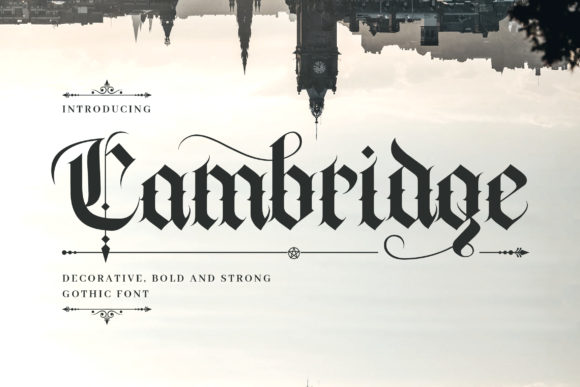
At first glance, Cambridge presents the hallmarks of blackletter—sharp, angular strokes, intricate detailing, and a vertical emphasis. But look closer, and you’ll notice a thoughtful elegance. The letterforms are balanced with a modern designer’s eye, ensuring they work together harmoniously rather than appearing as a mere historical artifact. This makes it a versatile creative font, one that can feel both authoritative and artistic. It’s a typeface that doesn’t just sit on a page; it makes a statement, lending a sense of craftsmanship and intention to any design it touches.
For designers and brand strategists, this kind of font offers a powerful tool for differentiation. In a landscape saturated with clean sans serifs and friendly script fonts, a well-chosen blackletter can cut through the noise. Cambridge provides that opportunity without sacrificing legibility or professional polish.
Where a Font Like This Truly Shines
Understanding a font’s personality is key to using it effectively. Cambridge’s gothic-inspired elegance makes it exceptionally suited for projects where tradition, prestige, or artisanal quality are part of the story. Think about the branding for a high-end distillery, a bespoke tailor, a classic barbershop, or a specialty coffee roaster. The font instantly communicates a dedication to craft and heritage.
Its applications extend far beyond logos. Consider its impact in packaging design, where it can elevate a product on the shelf, suggesting a story behind the label. For editorial layouts and magazines, it can create striking headlines that draw readers in. In the digital realm, it can add serious gravitas to a website’s hero section or create memorable social media graphics that stop the scroll. From wedding invitations and event posters to merchandise and book covers, Cambridge serves as a design asset that transforms the ordinary into something memorable.
Pairing for Clarity and Contrast
The true test of a display font is how it works with others. A common question is how to use a strong blackletter without overwhelming a design. The answer lies in intelligent font pairing. Cambridge, with its detailed and bold presence, naturally commands attention. Therefore, it pairs best with fonts that offer simplicity and space.
A clean, geometric sans serif font is a classic partner. The contrast between Cambridge’s ornate forms and the straightforward lines of a typeface like Helvetica or Futura creates visual interest and ensures readability for body text. Alternatively, a simple, elegant serif font can create a more traditional yet still balanced composition. The key is to let Cambridge own the headlines and key phrases, while its partner font handles the supporting text, maintaining a clear visual hierarchy that guides the viewer’s eye.
Practical Considerations for Your Project
Before integrating any new typeface into your workflow, a few practical steps ensure success. First, always test the font in context. Type out the specific words and phrases your project will use. This reveals how letter combinations interact and confirms the font works for your actual content, not just the alphabet.
Next, explore the included font styles. Does Cambridge come with alternate characters, ligatures, or multiple weights? These features can significantly expand your creative options, allowing for more customized and refined typography. Finally, for any commercial project, licensing is non-negotiable. Ensure you have the correct commercial font license that covers your intended use, whether it’s for a client’s brand, digital products, or printed merchandise. This protects both you and your client.
Choosing a typeface like Cambridge is a decision to invest in visual identity. It’s about selecting a tool that not only looks beautiful but also communicates a specific message and feeling. When matched to the right project, it does more than just display words—it builds recognition, enhances professionalism, and engages an audience on a deeper level. It turns a creative idea into a standout visual statement.