Athena: The All-Caps Typeface Commanding Creative Attention
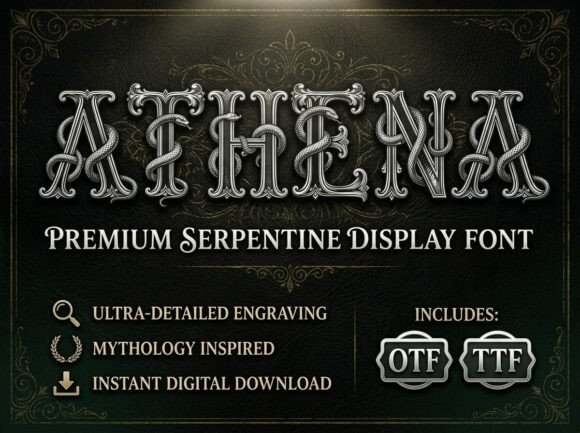
There’s a moment in every design project where the typography either whispers or it shouts. If you’re working on something meant to stand out—a headline that stops the scroll, a logo that becomes instantly recognizable, packaging that jumps off the shelf—you need a typeface that isn’t afraid to make a statement. Enter Athena, a decorative display font built for exactly those moments. This isn’t just another set of letters; it’s a collection of unique artistic elements, each one crafted to be a visual centerpiece. Designed with a strong personality and polished finish, Athena is for creators who want their work to break away from the ordinary and command attention.
When Your Design Needs More Than Just Words
Let’s be honest, not every font is made for every job. A delicate script might be perfect for a wedding invitation, but it would get lost on a bold product label. A clean sans-serif is great for body text on a website, but it might lack the flair needed for a hero banner. This is where understanding font categories becomes practical. Athena sits firmly in the display font family. Think of display typefaces as the headline acts of the typography world—they’re designed for short, high-impact text at larger sizes. Their intricate details and artistic flair are meant to be seen, not just read in long paragraphs.
What makes Athena particularly compelling is its fusion of decorative artistry with a surprisingly professional finish. It avoids looking messy or overly whimsical, instead offering a sophisticated, high-contrast style that feels both modern and timeless. This balance is crucial. You get the visual personality and uniqueness of an artistic font without sacrificing the clean, polished look that clients and audiences expect from professional work. It’s the kind of premium font that elevates a project from good to memorable.
Practical Applications: From Brand Identity to Marketing Collateral
Theory is nice, but where does a font like Athena actually work? Its all-caps nature and decorative style make it a specialist tool. Using it for your entire 500-word blog post would be a readability nightmare. Instead, its power is unleashed in targeted, strategic applications where every letter is meant to be a work of art.
- Logo Design & Brand Identity: This is Athena’s sweet spot. A logotype set in Athena can become the cornerstone of a brand identity for a boutique, a creative agency, a luxury product line, or a high-end event. Its strong visual personality ensures the logo is distinctive and memorable. It pairs beautifully with a simpler sans-serif font for body copy, creating a clear hierarchy.
- Packaging Design: On a crowded shelf, packaging has about three seconds to grab a customer’s attention. Athena is engineered for that moment. Use it for the product name on a coffee bag, a artisanal soap label, or a gourmet food box. Its decorative details suggest quality and craftsmanship, telling a story before the customer even reads the description.
- Editorial & Poster Design: For magazines, book covers, or event posters, Athena can create stunning, magazine-worthy headlines. It’s perfect for pull quotes, chapter titles, or the main title on a movie or theater poster, adding a layer of artistic gravitas.
- Web & Social Media Graphics: In the digital realm, visual consistency is key. Use Athena for the main headline on a website’s homepage hero section, for Instagram story titles, or as the prominent text on a Pinterest pin. It creates a cohesive look across platforms that strengthens brand recognition. Just ensure the surrounding text uses a highly readable web font.
- Marketing Assets & Merchandise: Think about business cards, tote bags, t-shirts, or promotional posters. Athena turns simple merchandise into desirable items. A single word or initials set in this typeface can become an iconic graphic element for your brand’s marketing.
Making It Work: Pairing, Readability, and Licensing
Choosing a bold font like Athena is just the first step. Using it effectively requires a bit of strategy. Here’s some practical advice to integrate it seamlessly into your workflow.
Master the Art of Font Pairing: A display font thrives with a supporting cast. The golden rule is contrast. Pair Athena with a clean, neutral sans-serif font like Helvetica, Arial, or a modern geometric sans for body text and supporting information. You could also try a classic serif font like Garamond for a more traditional, elegant contrast. The goal is to let Athena shine for headlines while ensuring longer text remains comfortable to read.
Respect the All-Caps Rule: This is non-negotiable. Athena is an ALL-CAPS typeface. It does not include lowercase letters. This isn’t a limitation; it’s a deliberate design choice that contributes to its powerful, monumental feel. Forcing it to work where mixed case is needed will only create frustration. Embrace its uppercase nature for projects where that style is a benefit, not a constraint.
Test Before You Commit: Always test a font in context. Type out your actual project title or brand name. See how the letters interact. Check the spacing (kerning) between specific letter pairs. View it at the exact size you plan to use. Does it maintain its clarity and impact? Does the personality match your project’s tone?
Understand Your License: When you invest in a commercial font like Athena, you’re not just buying files; you’re buying the right to use it in specific ways. The package typically includes an OTF file for professional design software and a TTF for universal compatibility. Crucially, review the licensing agreement. It will outline whether you can use the font for client work, merchandise for sale, digital products, and more. This is a vital step for any designer or business owner to avoid legal issues down the line.
A Tool for the Bold and the Artistic
Ultimately, Athena is more than just a collection of glyphs. It’s a design asset for those specific projects where subtlety isn’t the goal. It’s for the entrepreneur launching a brand with a distinct voice, the designer creating a portfolio piece that needs to pop, or the content creator crafting a visual identity that stands out in a saturated feed. By understanding its strengths as a creative font and using it with intention—pairing it wisely, applying it to the right contexts, and respecting its design—you can leverage its unique artistic elements to create work that isn’t just seen, but remembered. It’s a testament to how the right typeface can become a fundamental part of your visual communication, turning ordinary projects into extraordinary ones.